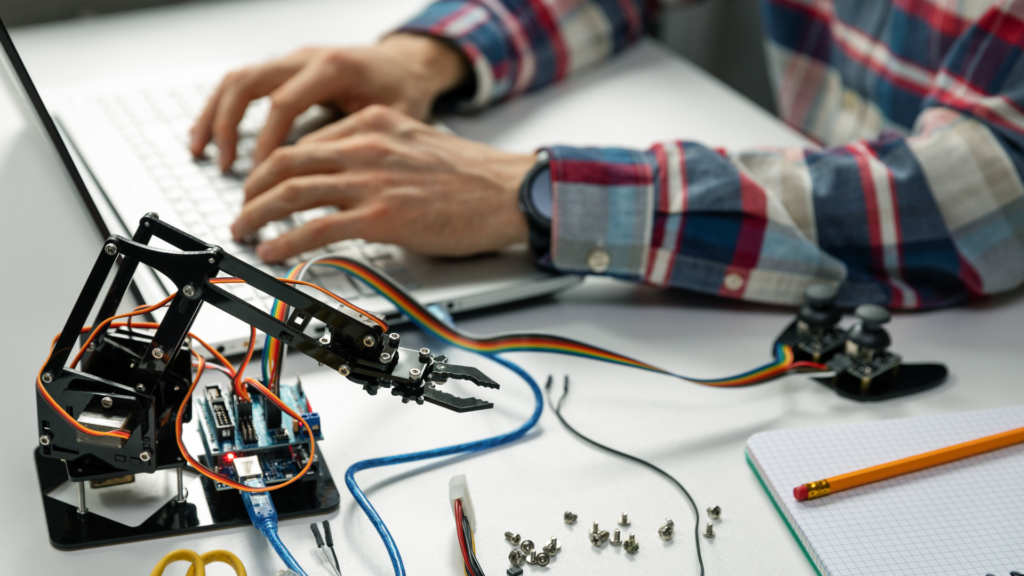
At ALC, students explore how robotic systems work so they can begin building and advancing these technologies across the continent and beyond.
For decades, the most advanced robotics laboratories were located far from Mauritius and even the African continent.
Many of Mauritius’ most talented students who wanted to experiment with machines, automation, and intelligent systems believed they needed to travel abroad to access those opportunities.
But now, we are entering a new moment.
Across Africa, a new generation of builders is emerging. Engineers, programmers, and innovators are beginning to design systems that respond to both local challenges and global possibilities.
The Introduction to Robotics Program invites students to take their first step into that world.
At ALC, students explore how robotic systems work so they can begin building and advancing these technologies across the continent and beyond.
Throughout the program, students design and program a series of working systems that introduce the core components of modern robotics.
These include:
Together, these projects guide students from simple electronic circuits to fully programmed robotic systems.
Students work with technologies commonly used in leading robotics and engineering laboratories around the world, including:
An open-source platform widely used for building and programming electronic systems and embedded devices.
Modular robotics systems that integrate sensors, motors, and programmable logic to create autonomous machines.
Core components that allow robotic systems to detect environmental inputs and translate them into movement and control.
Breadboards, LEDs, resistors, and other elements used to prototype and test electronic systems.
Through these tools, students gain practical exposure to the hardware and software systems that power modern robotics.
Students begin by exploring the building blocks of modern electronic systems. Through guided projects, they learn how circuits, microcontrollers, and code interact to produce real-world behaviour.
On the second day, students apply the concepts from Day 1 to complete robotic systems. Working in teams, they assemble and programme autonomous robots capable of responding to their environment.
The program is open to students aged 16–23 based in Mauritius who are curious about how modern technology works and want to explore robotics through hands-on experimentation.
Students interested in engineering, robotics, computer science, or emerging technologies will benefit most, particularly those who enjoy building systems and testing ideas.
No previous experience in robotics or programming is required. Beginners are welcome.
Robotics is one of the fastest-growing technology sectors in the world today. As automation and artificial intelligence transform industries across Africa and the global economy, the ability to design, program, and understand intelligent machines is becoming an increasingly valuable skill.
Students who explore robotics often go on to pursue careers in fields such as:
Across sectors ranging from agriculture and logistics to healthcare and infrastructure, robotics and intelligent systems are reshaping how work is done and how economies grow.
For many students, this program offers a first step into the world of engineering and robotics, opening pathways into some of the most commercially significant and technologically advanced fields today.
Robotics, automation, and intelligent machines are rapidly shaping the future of industries across Africa and the global economy.
At ALC, we believe that when Africa’s most ambitious students have access to the right tools, ideas, and opportunities, extraordinary things become possible.
The Introduction to Robotics Program brings together curious builders who want to understand how modern machines work and how they can help shape the technologies of the future.
Join us at African Leadership College in Mauritius on 24–25 April and start building.